
Brand Strategy vs. Branding: What’s the Difference?
Stop guessing: clarify your positioning, messaging, and visual identity.

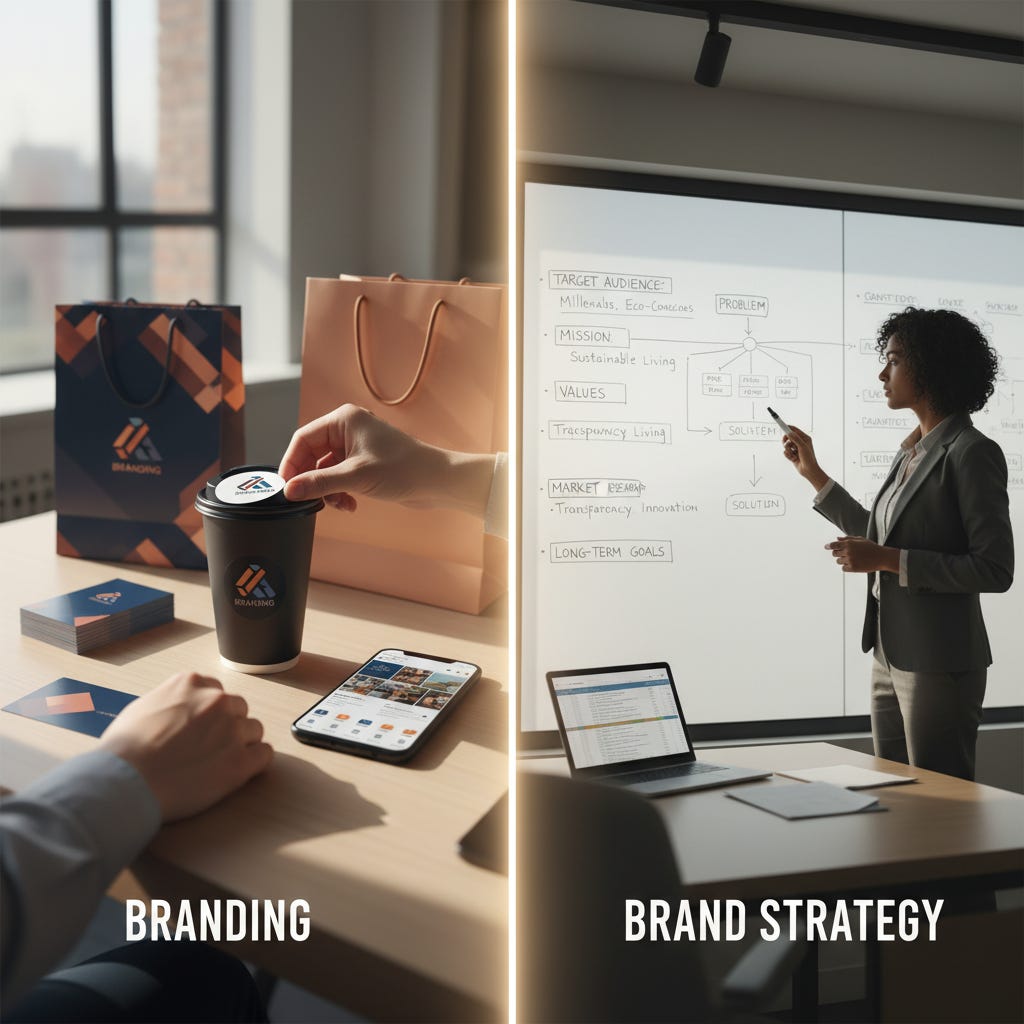
If your marketing feels inconsistent, it’s usually not a content problem. It’s a strategy problem.
Many small business owners use “brand strategy” and “branding” interchangeably. It makes sense because they’re closely connected, but they aren’t the same.
Knowing the difference helps you stop guessing, clarify your messaging, and build a brand that honors what you’ve built while making room for what’s next.
In this post, we’ll break down:
Brand strategy vs. branding
What each concept includes
Common mistakes
Quick Definitions (Simple + Clear)
What is brand strategy?
Brand strategy is the plan. It’s the thinking behind your brand—your direction, decisions, and positioning.
It answers questions like:
Why do you exist?
Who do you serve?
What do you want to be known for?
Why should someone choose you over the next option?
Brand Strategy: What It Includes
Here are the core brand strategy pieces that most small-business brand strategies should cover:
Mission, values, and purpose: The “why” behind your work, and the principles you won’t compromise.
Ideal audience + pain points: Who you serve best, what they’re struggling with, and what they truly care about.
Brand positioning + differentiation: Where you fit in the market and what makes you meaningfully different.
Brand messaging pillars: The three-to-five themes you want to be known for and that your content should consistently reinforce.
Offer clarity: What you sell, who it’s for, and why it matters without over-explaining.
Customer journey: How people go from “new to you” to “ready to buy,” and what they need at each step.
What is branding?
Branding is the expression. It’s how your strategy shows up in the real world—visually and verbally.
It answers questions like:
What do you look like?
How do you sound?
Do people recognize you quickly?
Does your presence feel consistent and trustworthy?
Branding: What It Includes
Branding is what most people think of first, and it is important. It typically includes:
Logo, color palette, and typography: The foundational visual elements people associate with your business.
Visual system/templates: A repeatable design system for social posts, decks, proposals, and more.
Brand voice and tone: How you sound in writing and conversation (confident, warm, direct, playful, etc.).
Photography/imagery style: The look and feel of your visuals—posed vs. candid, bold vs. soft, minimal vs. detailed.
Website look/feel and design consistency: Your online “home base” should match your quality, pricing, and personality.
The Key Difference (One-Line Summary)
Strategy is the thinking; branding is the look + feel.
Or another way:
Brand strategy tells you what to say and why.
Branding helps people recognize it instantly.
Common Mistakes (and How to Fix Them)
Branding first, strategy later
You end up with something pretty but unclear.
Fix: Start with positioning and brand messaging before you invest heavily in visuals.
Strategy done once, never revisited
Your business grows, but your message stays stuck in an older season.
Fix: Revisit your positioning and messaging at least annually, or whenever you pivot, raise prices, or change offers.
Inconsistent visuals because there’s no system
You’re constantly reinventing the wheel, and your brand looks different every week.
Fix: Create a simple brand kit + templates so your visuals stay consistent.
Trying to appeal to everyone
When your message is for “anyone,” it lands with no one.
Fix: Tighten your brand positioning and speak directly to the people you serve best.
Which One Do You Need Right Now?
Use this quick checklist to decide what to prioritize.
You need a brand strategy if:
Your messaging feels vague
You attract the wrong clients
Your content feels random
You can’t clearly explain what makes you different
You need branding if:
You have clarity, but your look feels inconsistent
Your visuals feel DIY or outdated
Your website doesn’t match your pricing or quality
You need both if:
You’re pivoting
You’re raising prices
You’re launching a new offer
You’re reintroducing your business after a quiet season
Real-World Example
Let’s say you’re a service-based business with a nice logo and a decent website, but leads are inconsistent.
Often, the issue isn’t the logo. It’s likely that your brand strategy isn’t clear. Maybe your homepage headline is generic, or your offer sounds like everyone else’s. It could be that your brand messaging doesn’t speak to a specific pain point.
Once strategy clarifies your brand positioning, your content becomes easier to write, and your calls to action become more confident.
Then branding supports that clarity by building recognition and trust with:
Consistent visuals
A clear voice
A website that feels aligned with your values
Mini Next-Steps Framework
If you want to bring your strategy and branding into alignment, start here:
Write your “I help…” statement
Example: “I help [who] achieve [result] through [how].”
Identify three messaging pillars
What are the three themes you want your audience to associate with you?
Do a mini brand audit of your homepage
Check your headline, CTA, and services section for clarity.
Align visuals to match the strategy
Update templates, colors, typography, and imagery so everything feels cohesive.
If you’re not sure whether you need strategy, branding, or both, a brand audit is the fastest way to get answers.
McKay Creative Solutions can help you clarify your positioning, tighten your brand messaging, and build a brand presence that honors your legacy while setting you up for growth.
Book a strategy call, and let’s build a clear brand strategy that honors your legacy and supports your next season of growth.